In 2023 The Cost of Groceries Increased 8% Year on Year
How Do Rising Fuel Prices Affect Our Grocery Spending?
We found that Toowoomba and Bendigo have the largest average distances to a supermarket for Australia’s 21 largest cities (2159m and 2154m, respectively). Based on current petrol prices, if residents from these two cities drove to the supermarket every week rather than using a delivery service, they would be adding $52 in petrol cost to their annual grocery spend. Not to mention the cost of tolls, parking, and car maintenance (as well as the stress of city traffic!).How is your location secretly affecting your spending? Check the full breakdown below.
Annual cost of driving to the supermarket for Australia’s 21 largest cities, ranked by cost:
| City | Average Distance to supermarket (km) | Annual distance driven to/from supermarket per year, assuming one journey per week (km) | Annual petrol consumption of driving to/from supermarket (litre) | Annual petrol cost of driving to/from supermarket (dollars) |
|---|---|---|---|---|
| Toowoomba | 2.159 | 224.54 | 24.92 | 51.90 |
| Bendigo | 2.154 | 224.02 | 24.87 | 51.79 |
| Townsville | 1.919 | 199.58 | 22.15 | 46.14 |
| Hobart | 1.819 | 189.18 | 21.00 | 43.74 |
| Mackay | 1.661 | 172.74 | 19.17 | 39.94 |
| Albury-Wodonga | 1.648 | 171.39 | 19.02 | 39.62 |
| Newcastle | 1.628 | 169.31 | 18.79 | 39.14 |
| Gold Coast | 1.601 | 166.50 | 18.48 | 38.49 |
| Cairns | 1.578 | 164.11 | 18.22 | 37.93 |
| Wollongong | 1.526 | 158.70 | 17.62 | 36.69 |
| Ballarat | 1.47 | 152.88 | 16.97 | 35.34 |
| Sunshine Coast | 1.456 | 151.42 | 16.81 | 35.01 |
| Darwin | 1.419 | 147.58 | 16.38 | 34.11 |
| Brisbane | 1.403 | 145.91 | 16.20 | 33.73 |
| Geelong | 1.39 | 144.56 | 16.05 | 33.43 |
| Perth | 1.279 | 133.02 | 14.76 | 30.75 |
| Adelaide | 1.216 | 126.46 | 14.04 | 29.24 |
| Melbourne | 1.173 | 121.99 | 13.54 | 28.21 |
| Sydney | 1.164 | 121.06 | 13.44 | 27.99 |
| Canberra | 1.058 | 110.03 | 12.21 | 25.44 |
| Launceston | 1.039 | 108.06 | 11.99 | 24.98 |
How To Save Money on Groceries
With daily unleaded petrol prices hitting a record high, Australians are now set to face bigger bills than ever - before they even reach the supermarket cash register! Supermarket grocery shopping has already proven to catch out consumers with additional costs.According to our 2021 survey of 1,000 supermarket shoppers, 54% succumbed to impulse buys, whilst 38% also went over their food budget by buying more groceries than needed.
To help Aussies save money, we’ve provided some tips to follow when planning and doing your weekly grocery shopping:
Make a Shopping List: Plan your meals for the week and create a shopping list based on the ingredients you need. Stick to your list to avoid impulse purchases.
Shop with a Full Stomach: Shopping when you're hungry can lead to buying more items than you actually need. Eat a meal or snack before heading to the grocery store and you’ll make less impulse purchases.
Look for Sales and Discounts: As data suggests more supermarkets are making money from discounts, shoppers can take advantage of the increase in promotional offers. Check store flyers, websites, and apps for sales and discounts on items you regularly buy. Stock up on non-perishable items when they're on sale.
Buy Generic or Store Brands: Generic or store-brand products are often cheaper than name brands but can be of similar quality. Compare prices and opt for the more economical option.
Shop Seasonally: Purchase fruits and vegetables that are in season, as they tend to be cheaper and fresher. You can also buy in bulk and freeze or preserve seasonal produce for later use.
Avoid Convenience Foods: Pre-packaged and convenience foods are usually more expensive than cooking from scratch. Buy whole ingredients and prepare meals at home to save money and also eat healthier.
Compare Prices: Compare prices per unit to get the best value for your money. Sometimes buying a larger package is cheaper in the long run, but make sure it won't lead to waste if you can't use it all before it spoils. If you can freeze half a pack of something then do it.
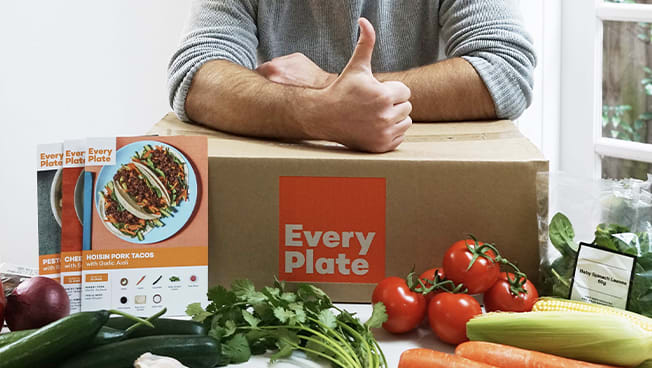
Shop Online: Sometimes online grocery shopping offers discounts, deals, or coupons that may not be available in-store. Additionally, it can help you avoid impulse purchases. You can also shop meal delivery services like EveryPlate online and help you plan the exact amount of ingredients you need in a week.
With so many additional costs associated with the everyday grocery run, Australians are turning to meal kit delivery services to avoid extra spending and shop savvier each week. We’re proud to say that our meal kits cost less compared to other meal delivery services, thanks to minimal packaging and a focus on only including the ingredients you really need for fuss-free mealtimes.
For a variety of great-value dishes you can cook from home (without the added travel expenses), just head to our Weekly Menu.
.jpg)
How to Grocery Budget With Meal Planning
Meal planning is a powerful strategy for making cheap meals while ensuring you have nutritious meals throughout the week. By dedicating some time each week to plan your meals, you can significantly reduce your grocery expenses.
Start by planning your meals weekly, taking into account ingredients you already have on hand to minimise waste. Utilising leftovers from previous meals is also a smart way to stretch your ingredients further and reduce food waste. By incorporating leftovers creatively, such as using roast chicken for sandwiches or salads, you can save both time and money.
If you’re only cooking for two people, you can minimise the amount of ingredients and waste you produce by planning five meals that use the same base ingredients. This can be choosing three meats, three different vegetables and two starches (such as pasta and potatoes). Switch up your recipes with different seasonings and cooking methods. For example, you could have chicken fajita pasta and chicken fajita wraps- two different recipes that use the same base ingredients!
Before heading to the grocery store, take stock of what you already have in your cupboards, fridge, and freezer. Base your meal plan around these items to avoid buying duplicates and make the most of what you already have. Additionally, consider buying staple items like grains, beans, and spices in bulk to save money in the long run.
Cooking in batches is a great way to save both time and money. By preparing large batches of meals and portioning them out for future lunches or dinners, you can reduce the need for takeout or convenience foods, ultimately saving you money.